The topic of Bitcoin mining news, especially during 2026 has surely climbed the priority charts, now that miners are facing a multitude of pressures; be it a changing Bitcoin economy, changing difficulties, or even electricity costs and, the constant risk of competition from AI infrastructures in the market; the bitcoin mining news has now begun to show an industry extending past the simple production of BTC, and towards data centres, as well as AI computing being considered as, apart from power contracts, other income streams for many operators in the field.
Mining bitcoins is the process by which special computers compete to process and verify bitcoin transactions, ensure the security of the bitcoin network, and then get paid by winning block rewards & transaction fees. The mining is miniaturizing, and the vast majority of the bitcoin world will be industrialized giant-mines equipped with proprietary ASICs, running through pools, with electricity contracts, and advanced treasuring plans.
Quick Bio Table
| Topic | Key Information |
| Focus Keyword | Bitcoin Mining News |
| Industry | Bitcoin and cryptocurrency mining |
| Main Technology | Proof-of-work and ASIC mining hardware |
| Key Metrics | Hashrate, mining difficulty, hash price, revenue, and production costs |
| Major 2026 Trend | AI and high-performance computing diversification |
| Major Challenge | Pressure on mining profitability and operating costs |
| Important External Factor | Electricity availability and energy policy |
| Regulatory Focus | Digital-asset rules, energy policy, and mining restrictions |
| Outlook | Increasingly diversified and infrastructure-focused |
Latest Bitcoin Mining News in 2026
The latest Bitcoin Mining News points to a difficult but rapidly evolving environment for operators around the world. Recent industry coverage has focused heavily on falling mining profitability, changing network difficulty, AI and high-performance computing pivots, regulatory developments, and the financial performance of publicly traded bitcoin mining companies.
One of the most important bitcoin mining updates this year has been the decline in mining difficulty during periods when weaker economics caused some machines to shut down. The Block reported that Bitcoin mining difficulty fell 10.09% in June to 124.93 trillion, giving miners that remained online roughly 11% more bitcoin production per unit of active hashrate while highlighting the financial pressure across the sector.
Mining difficulty is designed to adjust approximately every 2,016 blocks so that Bitcoin continues producing blocks at an average interval of about ten minutes. If too much compute power exits, the difficulty may also drop making it less of a challenge to attain the block rewards, however a lower difficulty doesn’t directly assure a profitable state to miners.
Bitcoin Mining News: The Future of Bitcoin Mining in a Changing Market
So the biggest challenge for miners now and going into 2026 will be the “profitability” question and that has to be looked in relation to cost of doing business, be that the electricity usage, the hardware investment and usage, debt burden, cooling expenses, the people, infrastructure, and maintenance requirements. CoinShares noted that “the publicly listed miners came into 2026 after a difficult 2025 having suffered a fall in the hash-price” which in 2025 reached or fell below breakeven levels for numerous operators.
However, this mining revenue is very unstable: it varies depending on the two following components: the price of Bitcoin and the whole competing computing power. As is the case today, as Bitcoin price continues to plummet with hashrate still at highs, mining income per unit of computation falls sharply, making older, more inefficient hardware the most vulnerable to becoming unprofitable.
The relationship between electricity prices and bitcoin mining profitability has therefore become more important than ever. A miner operating modern ASIC hardware with access to inexpensive and reliable electricity can remain competitive under conditions that could force a higher-cost operator to reduce its hashrate or shut down machines.
The economics are also changing because mining companies increasingly have opportunities to monetize the same energy infrastructure through AI and high-performance computing. CoinShares reported that publicly listed miners had announced more than $70 billion in cumulative AI and HPC contracts, illustrating how dramatically the business model is expanding beyond traditional Bitcoin production.
Bitcoin’s Hashrate & Network Competition
Bitcoin mining hash rate is a measure of the power put into securing the network, and a most-observed bitcoin indicator. As might be imagined an increasing hash rate essentially indicates strong competition and miner participation in mining while at the same time increasing the mining difficulty and lowering the amount of BTC that each hash receives.
A curious part of 2026 to observe: the bifurcation of miners’ AI pivot versus its negligible effect on the network’s Bitcoin hashrate. Bitcoin’s hashrate was near all time highs according to CoinTelegraph in June of this year-just as many large miners were beginning to shift into AI infrastructure. An AI pivot doesn’t always equal the swift death of Bitcoin computation.
More recent mining coverage suggests that hashrate has continued to be influenced by the balance between improving Bitcoin economics and the potential for longer-duration revenue from AI infrastructure. CryptoSlate’s September 2026 mining coverage specifically highlights the tension between Bitcoin’s recovering economics and AI’s ability to attract mining infrastructure and available power capacity.
Bitcoin Mining Companies Are Expanding Beyond BTC
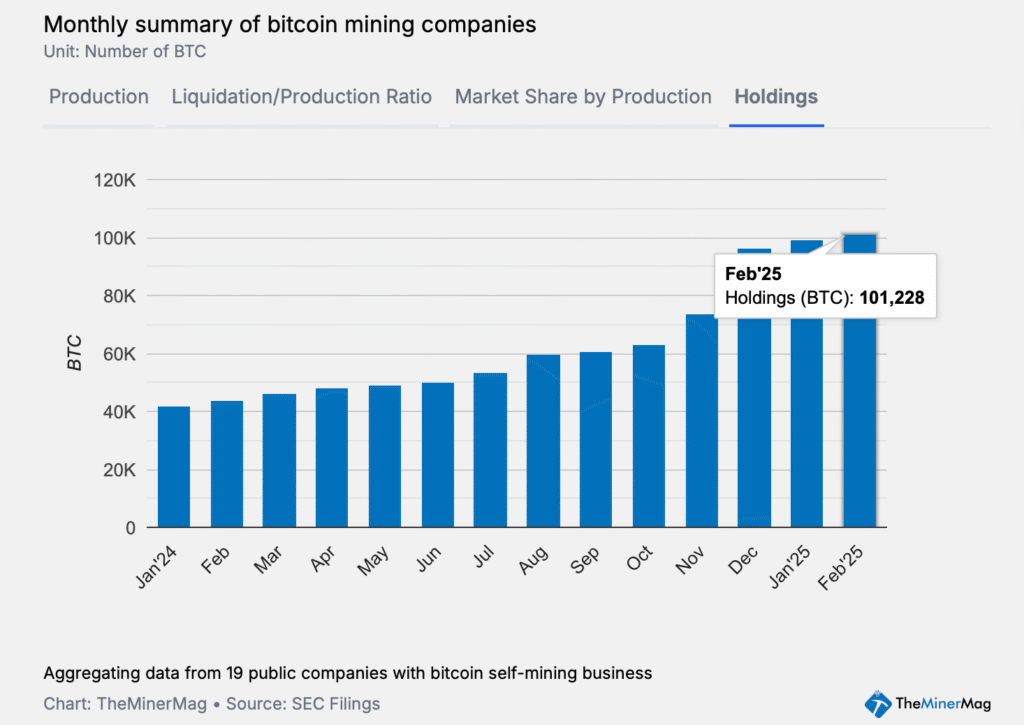
Bitcoin mining companies are increasingly becoming infrastructure businesses rather than simple cryptocurrency producers. The latest bitcoin mining news includes examples of major operators developing AI data centers, signing computing contracts, or reallocating infrastructure toward customers that may generate more predictable revenue than Bitcoin mining.
CoinDesk’s 2026 coverage shows this transformation clearly, with stories involving companies such as IREN, Riot Platforms, Core Scientific, and Hut 8 as they pursue AI and high-performance computing opportunities alongside or instead of traditional mining. These developments indicate that investors are increasingly evaluating mining companies according to their energy assets, data-center capacity, contracts, financing, and AI exposure rather than BTC production alone.
Core Scientific is one example of this transition, with CoinDesk reporting that the company secured an AMD AI deal while its Bitcoin mining operation was winding down. The development demonstrates how existing mining infrastructure can potentially be repurposed for data-center workloads when AI-related economics become more attractive than cryptocurrency mining.
Riot Platforms has also become part of this broader trend, with CoinDesk reporting an agreement connected to Anthropic that underscored the industry’s movement toward AI infrastructure revenue. Such deals could change how investors value mining companies because long-term computing contracts may offer a different financial profile from revenue that depends primarily on Bitcoin’s market price and mining difficulty.
The trends in Bitcoin Mining: Rise of AI and HPC
Could be seen as the other majorbitcoin mining trend for 2026. Some part of mining operations are gradually moving toward AI and high-performance computing technologies. However this trend is mainly economic as during periods of low hash values owners that own necessary equipment like land, power, cooling, data center expertise and transmission infrastructure are most likely to be willing to find more reliable and attractive deals for AI costumers than for Bitcoin mining.
Just because it’s the AI turn does not mean it’s the end for Bitcoin. This is how proof-of-work mining actually works, it is fundamental for Bitcoin. Rather, the sector appears to be diverging into disparate business models whereby some companies exclusively focus on producing BTC while others view mining as but one element of an overall digital infrastructure play.
This transformation could also affect future Bitcoin mining hashrate because every megawatt allocated to AI or HPC is potentially electricity that is no longer available for Bitcoin mining. However, if Bitcoin mining profitability improves enough, operators may continue adding ASIC capacity or return previously idled machines to the network, creating a dynamic relationship between crypto mining and AI infrastructure.
Bitcoin Mining Regulations and Energy Policy
Regulations The mining environment’s regulations is another issue for miners in that consumption of power at mining centers will be large and local electricity grids will feel it severely. Therefore, energy demand, grid’s security and reliability, and tax implication, environment concern as well as licensing are the subject of continued debate among authorities and governmental bodies on treatment of digital asset business.
US–The regulatory landscape for digital assets in the US continued to evolve in 2026 with the SEC and CFTC seeking to form their interpretations and regulatory framework governing the scope of activities that would be considered “crypto activities.” The CFTC’s 2026 release specifically discusses digital commodity activities known as protocol mining on proof-of-work networks, while the SEC has continued developing a broader regulatory framework for crypto assets.
Energy policy can be just as important as financial regulation for a mining operation because electricity is generally its largest ongoing operating expense. CoinDesk’s recent mining coverage has also highlighted cases where authorities have restricted or shut down mining activity because of power-capacity concerns, showing that access to electricity can become a regulatory issue as well as a commercial one.
Bitcoin Mining Revenue and the Changing Business Model
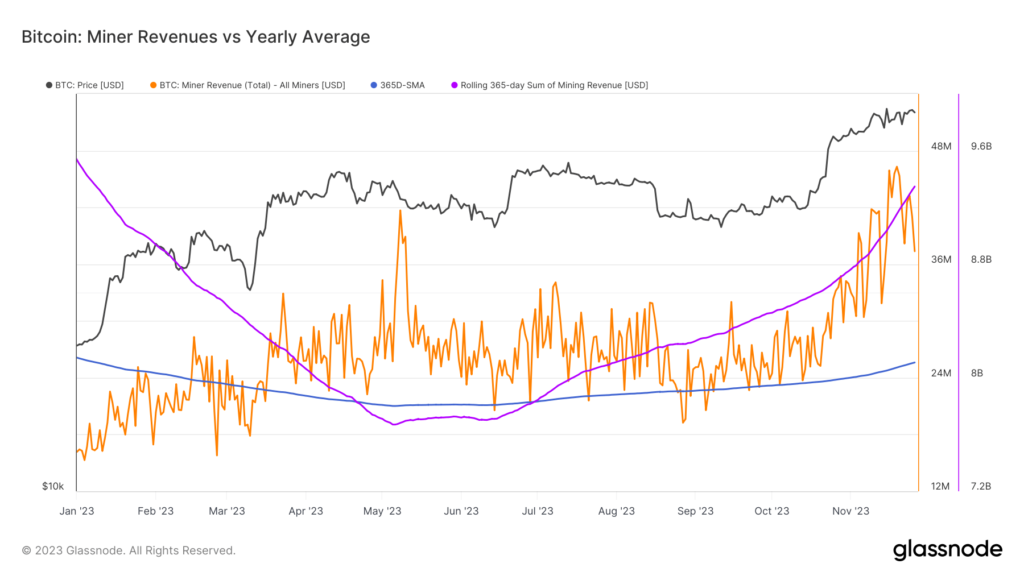
Bitcoin mining revenue traditionally comes from block subsidies and transaction fees, but the economic picture is becoming more complicated as companies add new business lines. AI hosting, high-performance computing, data-center leasing, and energy infrastructure development can potentially provide alternative revenue streams when Bitcoin mining margins become compressed.
CoinShares expects the revenue mix of some listed miners to change substantially as AI infrastructure projects become operational. Its research indicates that some publicly traded mining companies could derive a majority of their revenue from AI by the end of 2026, demonstrating the scale of the transformation underway in the sector.
For investors, this means comparing bitcoin mining companies may require more than looking at how much BTC each company produces. An operators balance sheet could be influenced by several things, such as how much debt they hold, the price of power, whether they got their machines on time, contracted AI revenue, how much CapEx is spent on, the size of their data center, whether they have Bitcoin on their treasury.
Here is the news miners will need to track for the rest of 2026.
The most important factor for miners will continue to be the relationship between Bitcoin’s market price and the cost of producing BTC. A stronger Bitcoin price can improve mining economics, while sustained price weakness can push inefficient machines offline and eventually contribute to lower network difficulty.
Network hashrate and mining difficulty will also remain essential indicators because they determine how much competition miners face for block rewards. A falling difficulty level can provide relief to operators that remain online, but a subsequent return of hashrate can increase competition again if profitable conditions encourage more machines to come online.
Electricity availability will remain another major competitive advantage as mining companies compete with AI data centers for energy resources. Operators with efficient hardware, long-term power agreements, strong infrastructure, and flexible load-management capabilities may be better positioned to survive periods of weak mining economics.
Regulation should also remain on every serious miner’s radar because policy decisions can affect where facilities are permitted to operate and how their electricity consumption is treated. The broader U.S. regulatory environment is still developing, while individual regions can impose separate energy or operational restrictions that materially affect mining economics.
The Future of Bitcoin Mining
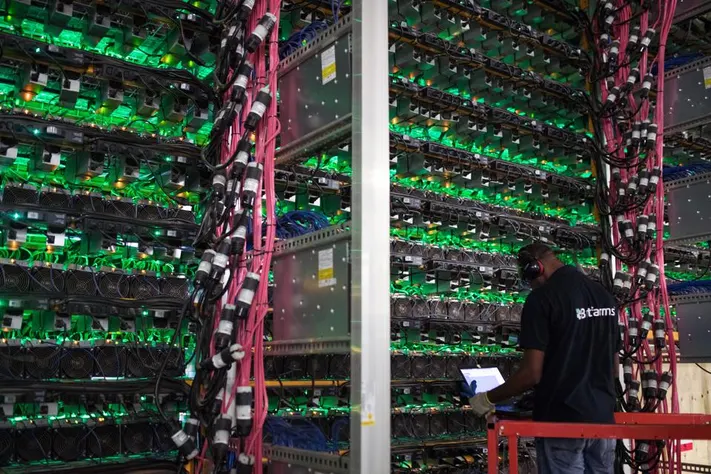
The future of Bitcoin mining is likely to be more diversified, capital-intensive, and closely connected to the global data-center economy. Mining companies that can efficiently manage electricity, computing hardware, financing, and infrastructure may have opportunities to participate in both Bitcoin mining and the rapidly expanding AI economy.
At the same time, the traditional mining business is unlikely to disappear simply because some companies are pursuing AI. Bitcoin’s proof-of-work security model still requires miners, and the network’s difficulty adjustment mechanism allows the system to adapt when some participants shut down while others continue operating.
One of the biggest news on Bitcoin Mining on 2026 would probably be, not Bitcoin Mining as a service or software, but the Miners. They are no longer seen as simply the entities consuming electric energy and producing BTC but rather owner of infrastructure, located where energy and computation, used for BTC, AI and other higher value workloads
Conclusion
News on 2026 Bitcoinmining follows the industry during its one of the turbulent times with a strain on profitability, difficulty volatility, have-rate variation and AI infrastructure growth along with regulation and the price of power deciding on its new environment. Latest bitcoin mining news shows leading Bitcoin mining operations will be compelled to more efficiently optimize their ASIC pools, power agreements, capital structure and assets including alternative revenue.
Bitcoin miners and investors have to do their bit and not watch one figure only; price or hash rate. Individual profitability in mining, difficulty, revenue, electricity costs and regulation trends along with the rising need for AI and what mining companies and miners have planned, will guide which miners can survive as we venture into the remainder of 2026.
Commonly Asked Questions
1) How would you describe Bitcoin Mining News?
Bitcoin Mining News is focused on events in the Bitcoin mining landscape, covering key areas that can influence mining-including profitability, hash rate, mining difficulty, mining hardware, mining energy costs, mining regulations, mining companies, mining pools and industry investments. Its intent is to educate miners and investors on how a range of different factors at play across the Bitcoin market and the wider economy have an impact on mining endeavors.
2) So why is Bitcoin mining profitability in 2026 crucial?
In short, it shows how cost-effective it is for mining revenues (block rewards + transaction fees) to be in 2026 versus your costs for power, hardware, and money (financing fees as well as actual interest). Profitable it the key for an increased hash price again, a problem for most miners that lower hash prices are causing while AI and HPC present opportunities to find alternative value for their mining equipment.
3) What exactly is Bitcoin Mining Difficulty?
Bitcoin mining difficulty refers to the effort it takes for mining hardware to find a valid block, and is adjusted once about every 2,016 blocks. In other words, it allows Bitcoin to maintain a target block average of approximately 10 minutes when the amount of available mining hashrate fluctuates.
4) Is Bitcoin mining drifting into AI
because miners infrastructure already gives access to the electricity/land/cooling/data center capacity that can be leveraged for AI and HPC customers. CoinShares reportes the transition to AI and HPC have sped up over 2025–26 from the public miners.
5) Is it sustainable to be a Bitcoin miner?
Bitcoin mining could still be profitable to users who use efficient hardware and purchase electricity at affordable rates, though profit margins are extremely volatile since price of Bitcoin, network difficulty, hashrate and operating costs fluctuate constantly. As far as the industry goes, it is being pushed into having owners that can work on cost efficiency, to diversify revenue Streams in hardware.
6) What is the 2026 trend of Bitcoin mining?
Future trends on Bitcoin mining would probably take it towards more automatic mining operation, more energy-efficient ASICs and more effective deployment of infrastructure. Companies positioning itself favorably in the coming years could bethose that make more intelligent deployment decisions for a combination of Bitcoin mining and other computational workloads.