What is patrick warburton net worth? Most estimates put it between $20 million and $30 million, built over four decades of TV, film, and voice work rather than any single big payday. There’s no official confirmation of the exact figure — like most celebrity net worth numbers, it’s an estimate assembled from salary reports and career history — but the range has stayed fairly consistent across 2024, 2025, and now 2026 estimates.
That consistency is worth pausing on, because it tells you something the estimate sites usually don’t: Patrick Warburton’s worth hasn’t spiked or crashed in recent years. It’s grown the slow way, through steady work rather than one blockbuster.
So, how much is Patrick Warburton worth, exactly?

Here’s where the honesty has to come in. Celebrity Net Worth, one of the most frequently cited sources for this kind of figure, currently lists him at $20 million. Other trackers — TheRichest, RichestLifestyle, Wealtholino — put him closer to $30 million, with one outlier estimate reaching $35 million. Nobody outside Warburton’s own accounting firm knows the real number, and no site quoting one down to the dollar is doing anything more than applying a formula to public salary rumors and career longevity.
If you saw a “Patrick Warburton net worth 2024” figure and a “Patrick Warburton net worth 2025″ figure that didn’t match, that’s normal — these are independent estimates from different sites using different assumptions, not a record of his finances actually changing year to year. The safest way to think about Patrick Warburton’s worth is as a $20–30 million range that’s held steady for the better part of the last decade.
Why net worth estimates for Warburton vary so much
Net worth sites build their numbers from a mix of known salary reports, real estate records, and career longevity — then apply a formula that’s rarely shown to the reader. For someone like Warburton, who’s spent 30-plus years in steady character and voice work rather than headline-grabbing franchise films, that method produces a wide spread. He’s never had a $20 million movie payday to anchor an estimate the way a leading man might; instead his money has come in smaller amounts from a lot of different places over a long career, which is exactly the kind of income history that’s hardest for outside estimators to pin down precisely.
The Seinfeld role that made him a household face
Warburton played David Puddy, Elaine Benes’s on-and-off boyfriend and Jerry’s mechanic, first appearing in the Season 6 episode “The Fusilli Jerry” in 1995. Contrary to what a lot of recap articles suggest, Puddy wasn’t a constant presence — Warburton left the show for two years to join the sitcom “Dave’s World,” then returned for a run of appearances in the final season.
So, how many episodes of Seinfeld was Patrick Warburton in? Ten, across four years, according to IMDb’s episode records. That’s a smaller footprint than fans often assume, and it’s a good example of how a character can become iconic on relatively little screen time — Puddy’s stone-faced stare and “yeah, that’s right” delivery did more work than raw episode count ever could.
Seinfeld didn’t pay him Seinfeld money, either. He was a recurring guest star, not part of the main cast, so his Patrick Warburton salary for those ten episodes would have been nowhere near what Jerry Seinfeld, Julia Louis-Dreyfus, Jason Alexander, or Michael Richards were earning by the show’s later seasons. No specific figure has ever been publicly reported, so it isn’t repeated here as fact. What Puddy gave him instead was visibility — the role opened doors to the lead in Fox’s “The Tick” and, eventually, steady TV work through the 2000s.
How much does Patrick Warburton make on Family Guy?

Warburton has voiced Joe Swanson, the wheelchair-using police officer next door to Peter Griffin, since the show’s 1999 debut — making it, by a wide margin, the longest-running job of his career. The Patrick Warburton Family Guy salary figure that circulates across nearly every entertainment site is $85,000 per episode. That number traces back to a single unverified report that’s been repeated, unchanged, for years, and no outlet has published updated or sourced figures since. Treat it the way you’d treat any recycled salary rumor: plausible, given how long the show has run and how valuable its original voice cast is to Fox, but not something anyone has actually confirmed on the record.
What is more solid is the arithmetic behind why that number matters. Family Guy passed its 400th episode during its 21st season in 2022–2023, and Fox has since renewed the show — along with The Simpsons and Bob’s Burgers — for four more seasons, carrying it through the 2028–2029 TV season. Season 24 has been airing since October 2025. Even a conservative per-episode rate, multiplied across two-plus decades of a 15-to-20-episode-per-season order, adds up to a genuinely substantial and — more importantly — remarkably stable income stream. Unlike a single film paycheck, voice work on a long-running syndicated hit keeps paying out season after season, which is likely the single biggest reason his net worth has grown steadily rather than in one big jump.
Warburton has also described how comparatively fast the job actually is. In a Newsweek Radio interview heading into the show’s 22nd season, he explained that the cast records efficiently — going in and knocking out multiple episodes in a single session, rather than the long, drawn-out shoot days of a live-action set. That efficiency is part of why voice work can be such a durable income source for actors: the time commitment per episode is genuinely small relative to the payday, especially once you’re a known quantity on a hit show.
He’s also spoken publicly about the show mattering financially in a very direct, personal way: at a 2024 PaleyFest event marking Family Guy’s 25th anniversary, Warburton said he used money from the show to help support his parents — even as his mother, by his own account, tried to get it canceled over its content. It’s a detail that says more about how much the role has meant to his finances, long-term, than any per-episode figure does.
Patrick Warburton’s earnings beyond animation: Rules of Engagement
From 2007 to 2013, Warburton played Jeff Bingham, the gruffly married half of the central couple, on CBS’s “Rules of Engagement.” The show ran for seven seasons and 100 episodes — a genuinely long run for a network sitcom, and one that would have paid a considerably higher rate than his old Seinfeld guest spots, in line with what established supporting-cast leads on a CBS multi-camera show typically earn. No specific salary figure for the role has ever been publicly reported or verified, so none is invented here — but seven seasons of steady network TV work is, on its own, a meaningful contributor to his overall earnings that a lot of shorter net-worth write-ups skip past entirely on their way to the animated voice work.
Before that, he’d bounced through “8 Simple Rules,” “Less Than Perfect,” and a string of guest and supporting roles — the kind of workmanlike TV career that builds wealth slowly rather than through one big break.
Movies, voice acting, and the Kronk factor
Warburton’s film résumé leans almost entirely on his voice rather than his face. His best-remembered animated role is Kronk in Disney’s “The Emperor’s New Groove” (2000) — a performance that earned him an Annie Award nomination for his voice work as Ken in “Bee Movie” as well — and he reprised Kronk in the direct-to-video sequel “Kronk’s New Groove.” He’s also voiced characters in “Chicken Little,” “Hoodwinked,” and “Open Season,” plus a long-running role as Brock Samson on Adult Swim’s “The Venture Bros.” On the live-action side, he played a supporting role across both “Ted” and “Ted 2” for Seth MacFarlane — a natural extension of their Family Guy working relationship — and took the title narrator role, Lemony Snicket, in Netflix’s “A Series of Unfortunate Events.”
None of these are the kind of $10–20 million lead-actor paydays that build celebrity fortunes overnight. What they add up to instead is a career built on being reliably cast in supporting and voice roles across three decades — commercials for brands like American Express and Honda included — which is a slower but steadier way to accumulate wealth than chasing one franchise lead.
His current work: stand-up and storytelling tours
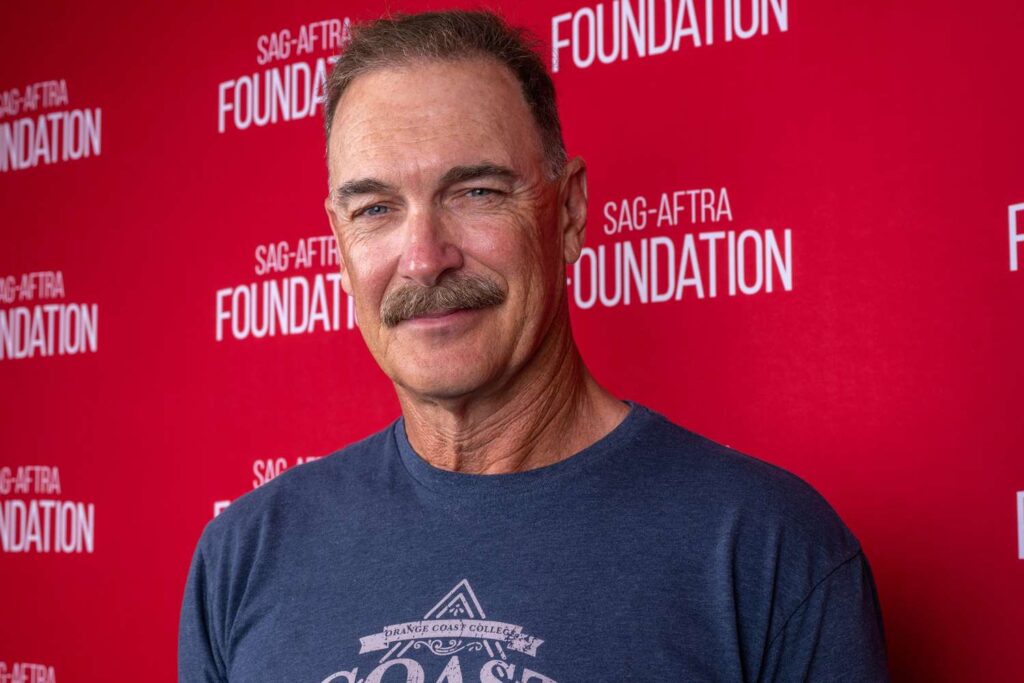
This is the part most net-worth roundups miss entirely, because they were written a few years ago and never updated: Warburton started touring as a live performer in 2025, and as of 2026 he’s actively playing theaters and comedy clubs across the U.S. and Canada. It isn’t traditional joke-telling stand-up — by his own description and venue billing, it’s closer to a conversational evening of Hollywood stories, voice-acting anecdotes, and audience interaction, delivered in that unmistakable deep voice. He released a special titled “Still Catholic” in 2025 and has continued booking dates into 2026, including stops at comedy clubs and performing-arts centers.
It’s a smart later-career pivot for someone whose voice and persona are the product — no writers’ room or studio greenlight required — and it adds a fresh, ongoing revenue stream that most of the older bios don’t account for at all.
The St. Jude connection
Since 2011, Warburton has hosted an annual charity event in Palm Desert, California, known as The Warburton (officially the Patrick Warburton Celebrity Golf Tournament), benefiting St. Jude Children’s Research Hospital. According to St. Jude’s own event page, the tournament has raised more than $42 million for the hospital since its inception — money that goes to St. Jude, not into Warburton’s own finances, but it’s a notable, sustained, and easily verified part of his public profile that most quick-hit net-worth pages leave out entirely in favor of listing his cars.
Personal life, briefly
Warburton was born November 14, 1964, in Paterson, New Jersey, and grew up largely in Huntington Beach, California, the son of an orthopedic surgeon and an actress. He’s been married to Cathy Jennings since 1991, and the couple has four children, including actor Talon Warburton. None of that moves the needle on his net worth directly, but it’s context most searchers land on this topic looking for alongside the money question.
(FAQs) Patrick Warburton net worth
1) What is Patrick Warburton’s net worth?
Estimates range from about $20 million to $30 million, with no official figure ever confirmed.
2) How much is Patrick Warburton worth in 2025 and 2026?
Estimates haven’t shifted meaningfully — the $20–30 million range has held steady across 2024, 2025, and 2026 net worth write-ups, which mostly reflects consistent income rather than any single windfall.
3) How much does Patrick Warburton make on Family Guy?
The commonly cited figure is $85,000 per episode, though that’s an unverified, years-old number that’s been copied across sites rather than independently confirmed.
4) What is Patrick Warburton’s Family Guy salary based on, long-term?
His per-episode pay, multiplied across more than 400 episodes since 1999, plus a show now renewed through the 2028–2029 season — making it the single steadiest income source of his career.
5) How many episodes of Seinfeld was Patrick Warburton in?
Ten episodes, across Seasons 6 and 9, according to IMDb.
6) How much did Patrick Warburton make per episode of Seinfeld?
No figure has been publicly reported. As a recurring guest star rather than a main cast member, his rate would have been well below what the show’s core four actors earned.
The bottom line
Nobody outside Warburton’s accountant knows his exact net worth, and any site telling you a precise figure — down to the dollar — is guessing with more confidence than the evidence supports. What’s clear is the shape of how he built whatever that number is: a decade-plus of steady voice work on Family Guy, seven seasons of network television on Rules of Engagement, a string of animated film roles anchored by Kronk, and now a second act as a touring storyteller. It’s a career built on consistency rather than a single windfall — which, going by the estimates that do exist, seems to be exactly why his wealth has grown gradually rather than in one dramatic leap.